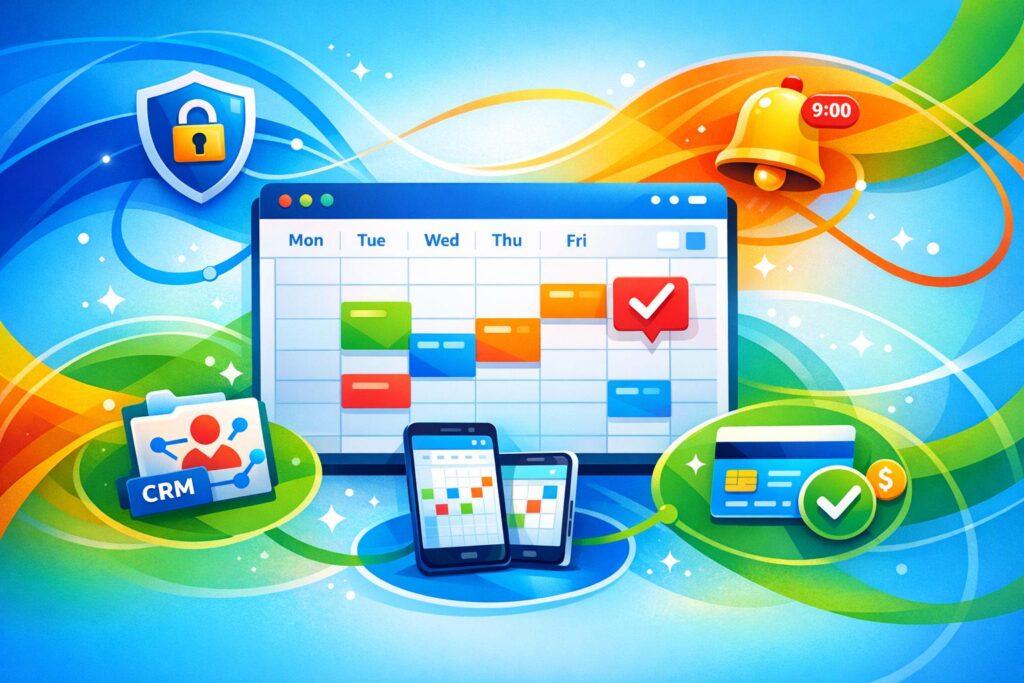
An online booking system simplifies scheduling for businesses and customers alike. It allows people to book appointments anytime, reduces no-shows, and streamlines operations with automation. Here’s a quick look at the 5 key features that make these systems effective:
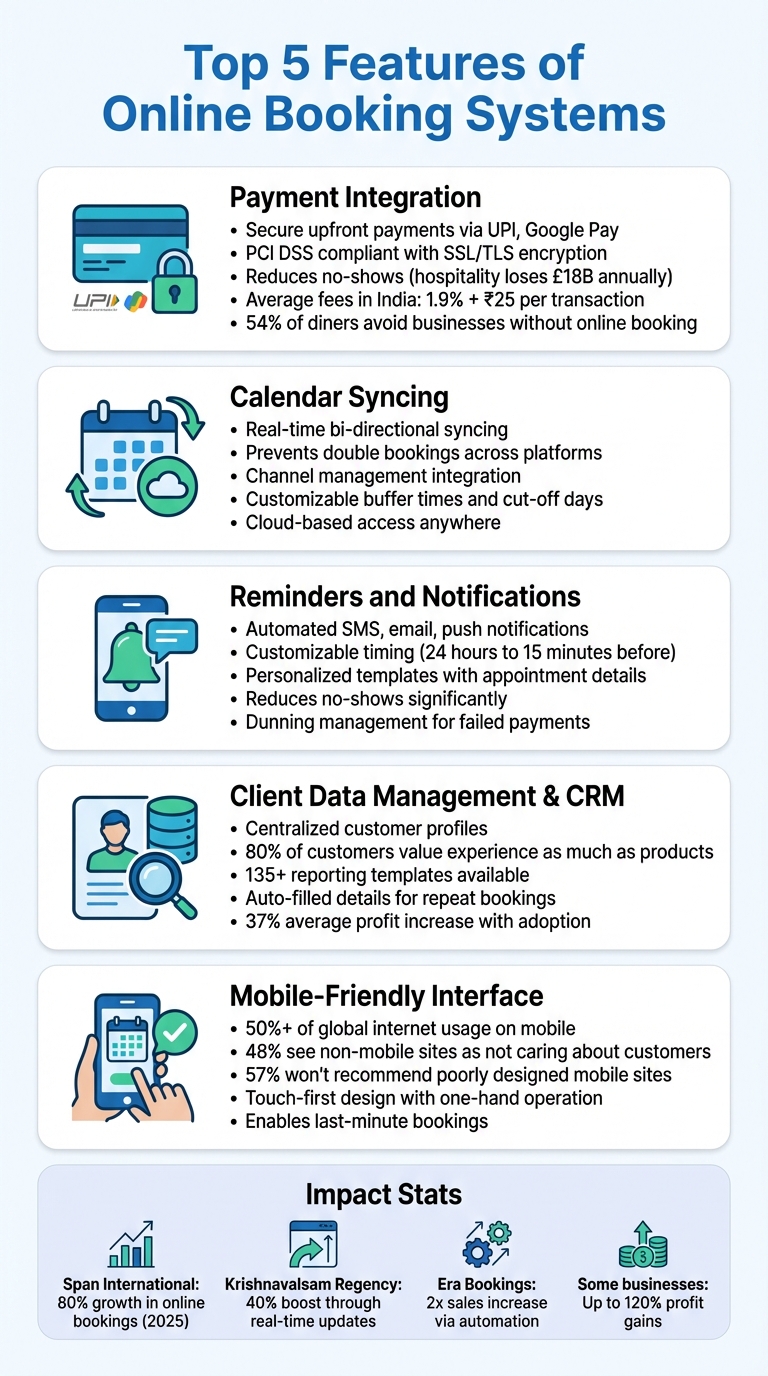
- Payment Integration: Secure, upfront payments via gateways like UPI and Google Pay reduce missed appointments and improve cash flow.
- Calendar Syncing: Real-time updates across platforms prevent scheduling conflicts and ensure smooth coordination.
- Reminders and Notifications: Automated SMS and email alerts help customers stay on track, cutting down on missed bookings.
- Client Data Management: Centralised profiles and CRM integration allow businesses to personalise services and track customer preferences.
- Mobile-Friendly Interface: A responsive design ensures users can book easily on smartphones, catering to India’s mobile-first audience.
These features not only simplify booking but also help businesses save time, reduce errors, and improve customer satisfaction. Whether it’s healthcare, hospitality, or education, an efficient booking system boosts operational efficiency while meeting customer expectations.
5 Essential Features of Online Booking Systems
1. Payment Integration
Payment integration simplifies the process of collecting payments by enabling customers to pay securely at the time of booking. This eliminates the hassle of handling cash or chasing payments after the fact, as transactions are processed automatically.
Security is a cornerstone of payment integration. Systems that comply with PCI DSS (Payment Card Industry Data Security Standard) ensure customer financial data is protected through strict protocols. Advanced features like tokenization replace actual card details with unique identifiers, while SSL/TLS encryption secures data as it moves between the customer’s device and the payment server. As EnKash highlights:
A well-implemented payment gateway integration ensures… secure and reliable payment processing… without exposing sensitive financial information [8].
This seamless connection between booking and payment not only enhances convenience but also reinforces system security.
The financial advantages are undeniable. Upfront payments significantly reduce no-shows, which cost the hospitality industry up to £18 billion annually [7]. Additionally, businesses gain the ability to accept payments round the clock, generating revenue even during non-business hours.
Including local payment options alongside international gateways can further improve conversion rates. For instance, in India, standard credit card fees average 1.9% + ₹25 per transaction, with some systems charging between ₹2,400 and ₹6,200 per month depending on transaction volume [5][6]. Notably, 54% of surveyed diners mentioned they would avoid establishments that don’t offer online booking options in advance [7].
Another key benefit is real-time confirmation. As soon as payment is processed, customers receive immediate booking confirmation, removing any doubts about securing their reservation. Automation also reduces the administrative workload, making operations more efficient.
2. Calendar Syncing
Calendar syncing keeps your availability updated across all platforms in real-time, ensuring that personal and third-party calendars – like Google Calendar or external booking sites – stay in sync [12]. With bi-directional syncing, any personal appointment added to, say, your Outlook calendar, automatically blocks that time in your booking system. This eliminates scheduling conflicts and streamlines operations.
The benefits are clear: no more manual back-and-forth to verify schedules. As Matellio explains:
The online booking process is efficient and saves time. It eliminates the necessity for the staff members to go back and forth and cross-check the details of the customers with other members [11].
For businesses juggling multiple distribution channels – hotels on Airbnb, Booking.com, or Hostelworld, for example – channel management integration is a game changer. When a room is booked on one platform, availability is instantly updated across all others. Bookinglayer stresses the importance of this speed: "To avoid overbookings, [synchronisation] needs to happen in real time" [2]. This centralised system doubles as an inventory management tool, ensuring resources are accounted for the moment they’re booked [10].
Modern systems also come with customisable scheduling controls, offering tools to fine-tune your calendar. You can add buffer times between appointments for cleaning or prep, set cut-off days to prevent last-minute bookings, or even hide a portion of availability to manage workloads [3]. These options ensure that your calendar reflects not just technical availability but what’s realistically manageable.
Most systems are cloud-based, meaning you can access and update your schedule from anywhere. Whether you’re at your desk or on the move, your calendar remains your go-to source for all booking information [11][4].
3. Reminders and Notifications
Timely reminders are a game-changer when it comes to reducing no-shows and keeping customers engaged. Think about it – when someone books an appointment weeks in advance, it’s easy for the date to slip their mind. That’s where automated reminders step in. A quick SMS or email can ensure the appointment stays on their radar, cutting down on missed bookings and protecting your revenue [3][14].
These reminders don’t just complement secure payments and synced calendars – they complete the customer experience. Whether it’s an SMS, email, or push notification, these systems ensure messages reach customers on the platform they prefer, boosting response rates [4]. As Aniya More, a content writer, rightly points out:
Manually drafting and sending emails to your customers for booking confirmations, reminders, cancellations, etc., can waste much of your time [4].
Automation takes over this task, freeing up your team while maintaining efficiency.
Modern systems let you set up reminders at intervals that work best for your business – whether it’s 24 hours before the appointment or just 15 minutes prior. Customisable templates make it easy to personalise messages with details like the customer’s name, appointment time, and even practical instructions. Want to include parking directions or a list of items to bring? No problem. These thoughtful touches enhance the overall experience and ensure customers feel well-prepared [5][2][3][14].
And the communication doesn’t stop there. If a payment doesn’t go through, dunning management features step in to send follow-up reminders, helping you recover revenue without the hassle of manual intervention [13]. Plus, with mobile-friendly systems, customers can access everything they need on the go, ensuring convenience at every step. This seamless approach highlights how a robust booking system can streamline operations and elevate customer satisfaction.
sbb-itb-3716372
4. Client Data Management and CRM Integration
Beyond secure payments and synced calendars, managing client data effectively can transform how businesses interact with their customers, adding a personal touch to every interaction.
A well-designed booking system doesn’t just schedule appointments – it creates detailed, centralised customer profiles. These profiles include essential information like contact details, booking history, and individual preferences, such as dietary restrictions or preferred room types. This makes it easier to cater to repeat customers and provide a more tailored experience[2][9].
When integrated with CRM tools, your booking system becomes even more powerful. It combines data from various sources – like social media activity, website analytics, and even offline interactions – into a single, unified profile[15]. This ensures that every department operates from the same information, reducing errors and delivering consistent service. In fact, Salesforce research reveals that 80% of customers consider the experience a company provides to be as important as its products or services[16].
Automating data synchronisation through tools like Zapier or Mailchimp allows booking details to flow seamlessly into your CRM. This enables personalised follow-ups and generates detailed reports on customer behaviour. For example, advanced systems like Zaui offer over 135 reporting templates, helping businesses analyse booking trends and identify new opportunities[1][9].
For businesses that rely on repeat customers, features like secure credit card storage simplify the checkout process. By auto-filling customer details, these systems make repeat bookings quicker and more convenient, reducing friction and improving the customer experience[10][1].
The data collected through these systems also fuels loyalty programmes and targeted marketing campaigns. By identifying high-value customers, businesses can trigger rewards like promo codes or exclusive discounts. Customisable intake forms before appointments allow businesses to gather specific details – such as gate codes or special requests – so staff can arrive prepared and deliver an exceptional experience[3][16].
When your booking system and CRM are properly integrated, you’re not just managing leads – you’re building meaningful, long-term relationships. Businesses that adopt online booking tools often see an average profit increase of 37%, thanks to their ability to deliver the personalised experiences customers now expect[16]. This integration lays the groundwork for creating mobile-friendly systems that enhance accessibility and convenience.
5. Mobile-Friendly Interface
With mobile devices now making up over 50% of global internet usage [18], having a responsive booking interface is no longer optional – it’s a must. In India, smartphones are the go-to device for everything, from booking a table at a restaurant to reserving a hotel room, especially when people are on the move.
The numbers tell the story: 48% of users see a site that isn’t mobile-friendly as a sign that the business doesn’t value its customers, while 57% say they wouldn’t recommend a business with a poorly designed mobile site [18]. And with Google’s mobile-first indexing now in play, businesses with non-responsive booking systems risk losing out on search visibility. This makes it crucial to design interfaces specifically for mobile users.
A mobile-friendly booking system should prioritise touch-first design. Think large, easy-to-tap buttons, readable text, and a booking process that can be completed with one hand. Features like auto-filled customer data, one-click rescheduling, and real-time calendars can turn potential drop-offs into confirmed bookings [17]. Adding familiar local payment options, such as Paytm and Google Pay, directly into the checkout process ensures fast and secure transactions [1].
Mobile optimisation also opens the door for last-minute bookings, which are particularly valuable in industries like travel and hospitality [19]. When users can quickly check availability, choose a time slot, and make payments on the go, businesses can capture opportunities that might otherwise slip away. Plus, automated SMS updates and web check-in options make the experience even smoother, eliminating the need for time-consuming phone calls.
Speed is just as important as design. Slow-loading pages can frustrate users and lead to abandonment during the booking process. Compressing images, cleaning up code, and using mobile-optimised servers can make a big difference. A fast, simple, and feature-rich mobile interface – complete with tools like automated waitlist management – keeps customers happy, encourages loyalty, and drives repeat bookings.
Conclusion
A seamless booking experience hinges on key features like reliable payment systems, real-time calendar syncing, automated reminders, integrated CRM tools, and a mobile-friendly design. Together, these elements reduce errors and no-shows while enabling 24/7 service – essential in India’s smartphone-driven market.
The impact of such systems is evident. For instance, in 2025, Span International experienced an 80% growth in online bookings, Krishnavalsam Regency achieved a 40% boost through real-time updates, and Era Bookings saw its sales double thanks to automation [21][20][16]. On average, businesses adopting advanced booking systems have reported a 37% profit increase, with some local enterprises noting gains as high as 120% [16].
For Indian businesses, however, a one-size-fits-all solution often misses the mark. To truly succeed, booking systems must accommodate local payment methods like UPI, Paytm, and Google Pay, offer multi-language support, and account for regional time zones and holidays. Many off-the-shelf options are designed for global markets and fail to address India’s unique needs, such as its linguistic diversity and mobile-first consumer behaviour.
This is where Greenmor steps in. Specialising in custom web development, they create booking systems tailored to India’s market. Whether you need a straightforward appointment scheduler or a complex, multi-service platform with custom features, a solution designed with your specific requirements in mind can elevate your business from average to exceptional.
An efficient booking system doesn’t just secure reservations – it drives revenue and fosters customer loyalty. By incorporating the right features, you’re not only meeting customer expectations but also building a system that encourages repeat business and long-term growth.
FAQs
How does payment integration in online booking systems enhance business operations?
Payment integration within online booking systems streamlines the entire payment process, enabling businesses to accept payments directly on the platform. This removes the hassle of manual invoicing and reconciliation, saving valuable time while reducing the chances of errors.
By offering instant payment confirmations, businesses can benefit from quicker cash flow and provide a smoother booking experience for their customers. This dual advantage not only boosts operational efficiency but also elevates customer satisfaction, simplifying the management of both bookings and payments in one convenient system.
Why is calendar syncing important to prevent scheduling conflicts?
Calendar syncing ensures instant updates across all booking channels, offering an accurate view of available time slots. This makes it easy to avoid double-bookings since users can only choose slots that are genuinely available.
By syncing calendars, businesses can streamline their scheduling, minimise mistakes, and offer a smooth booking process for customers. It’s particularly helpful when managing multiple appointments or coordinating across various platforms.
How does a mobile-friendly interface improve the customer experience in online booking systems?
A mobile-friendly interface is key to delivering a smooth and hassle-free customer experience. It ensures users can effortlessly access and navigate the booking system on their smartphones or tablets. With a responsive design, tasks like browsing, booking, and making payments become simple and efficient, even on smaller screens.
In India, where mobile usage dominates, having a well-optimised mobile interface is a game-changer for businesses. It allows them to reach a broader audience while offering unparalleled convenience. Customers can book services anytime, anywhere, without relying on a desktop or laptop. This ease of access not only boosts customer satisfaction but can also drive more bookings for businesses.